Argentina, Part 2 – The Wild Beauty of Patagonia
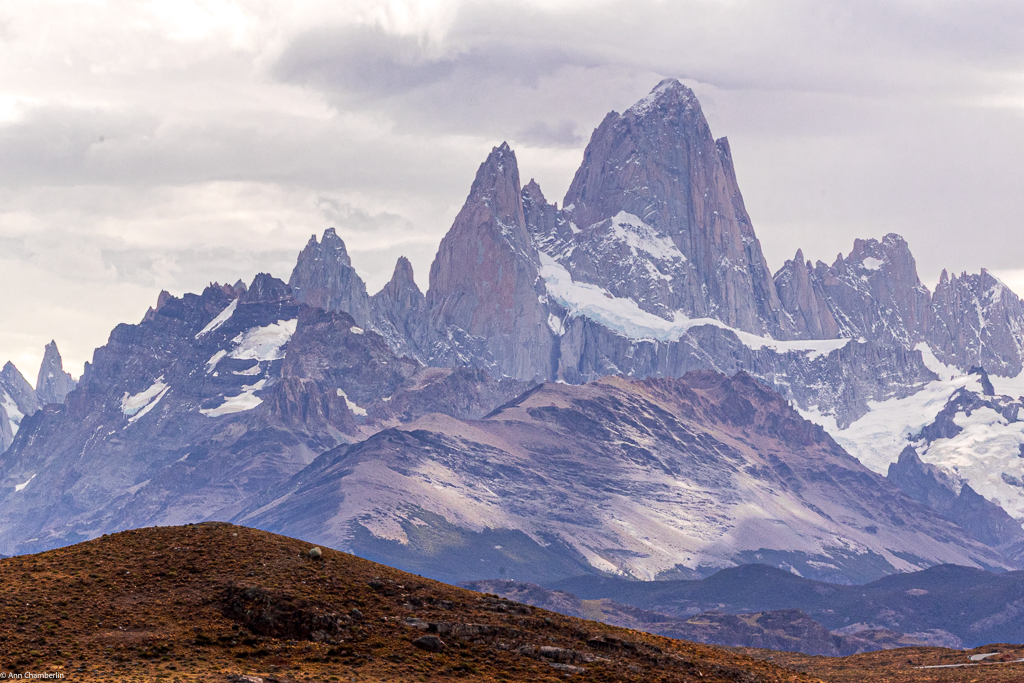
Mt. Fitz Roy, the Symbol of Patagonia
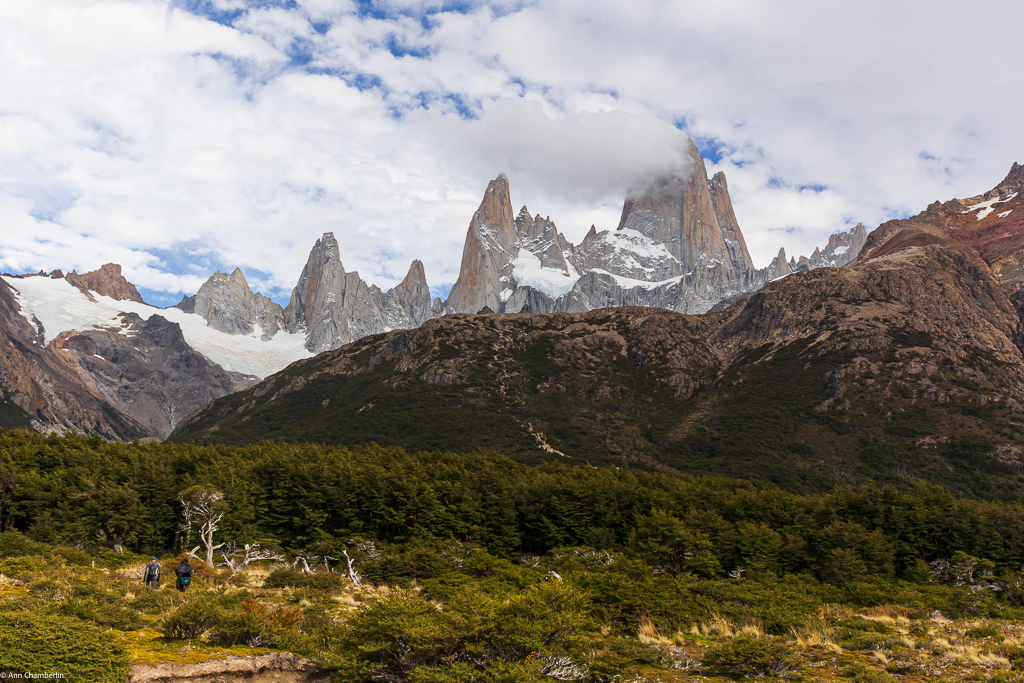
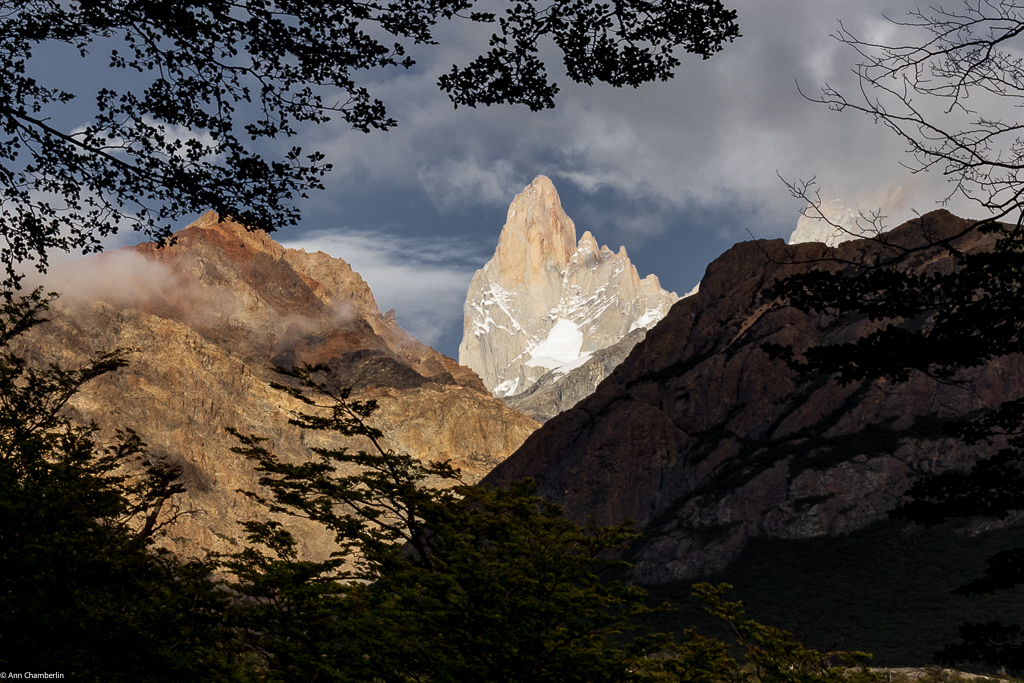
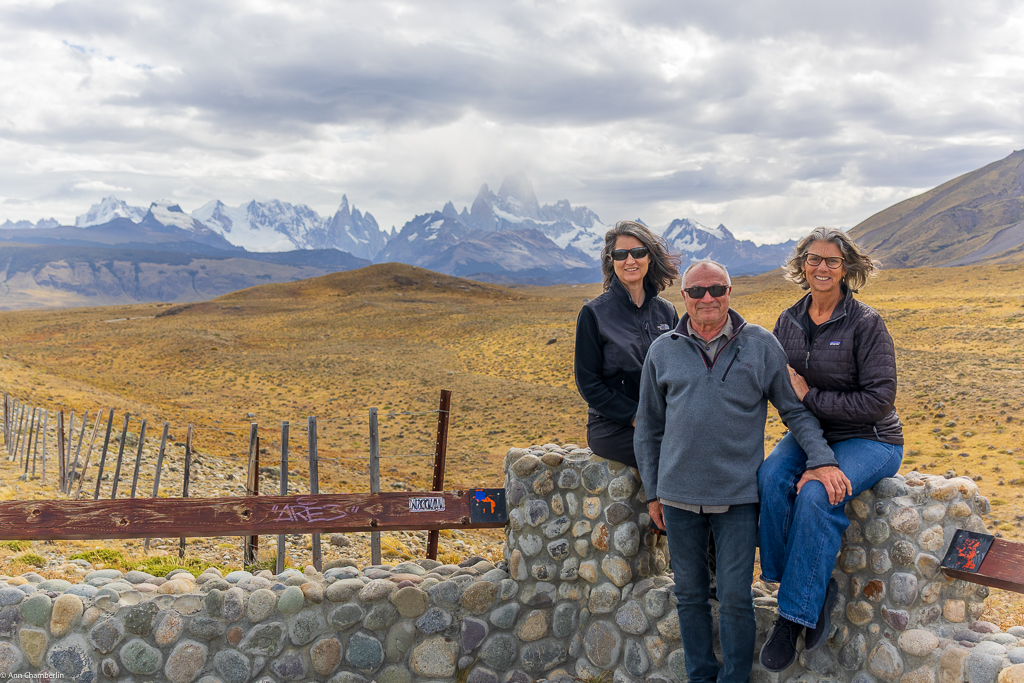
After Ushuaia, we began our journey north, where we would follow the Andes Mountains for thousands of miles. Our next destination was into the heart of Patagonia. We flew into El Calafate, then continued driving north for several more hours to the little town of El Chaltén, billed as Argentina’s trekking capital. El Chaltén sits near the base of Mt. Fitz Roy, the most famous mountain in Patagonia, and whose outline inspired the logo of the Patagonia clothing line.
In 1968, two Californians, Yvon Chouinard and Doug Tompkins, drove from Southern California to Tierra Del Fuego, climbing, surfing and skiing along the way. As they passed through this area, they become the third people to climb Mt. Fitz Roy and established a new route. Returning to California, Chouinard founded the company Patagonia, while Tompkins founded The North Face. Later, after Tompkins left The North Face, he purchased over 5 million acres of land in Patagonia, with the intent of preserving it forever as open land. His legacy has helped drive the development of ecotourism in Patagonia as well as creating the town of El Chaltén as its hub.
El Chaltén and Laguna de los Tres
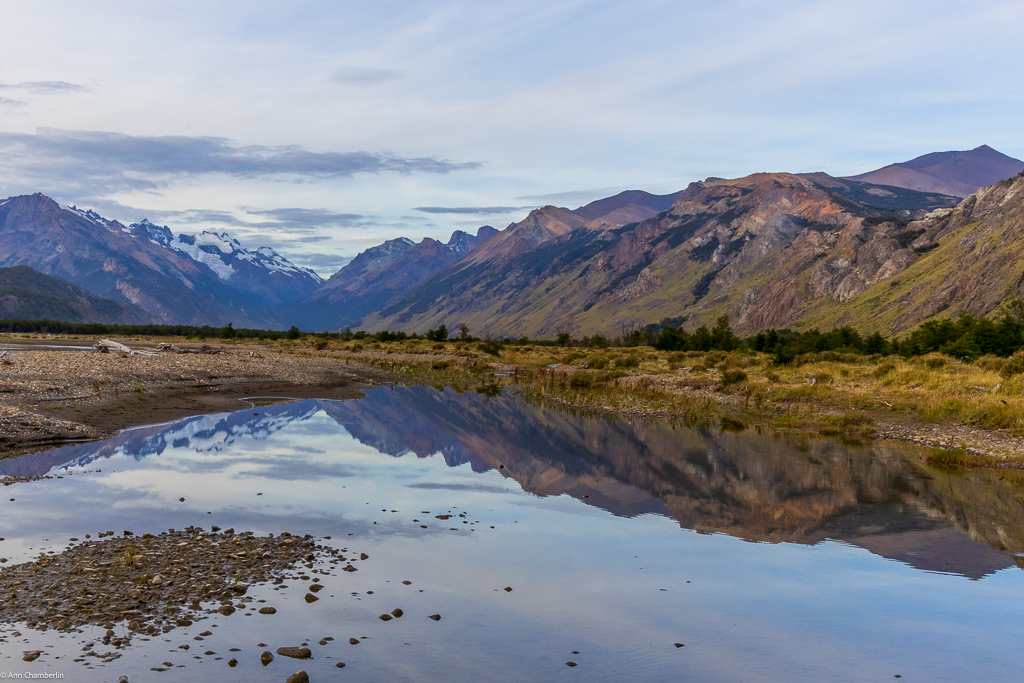
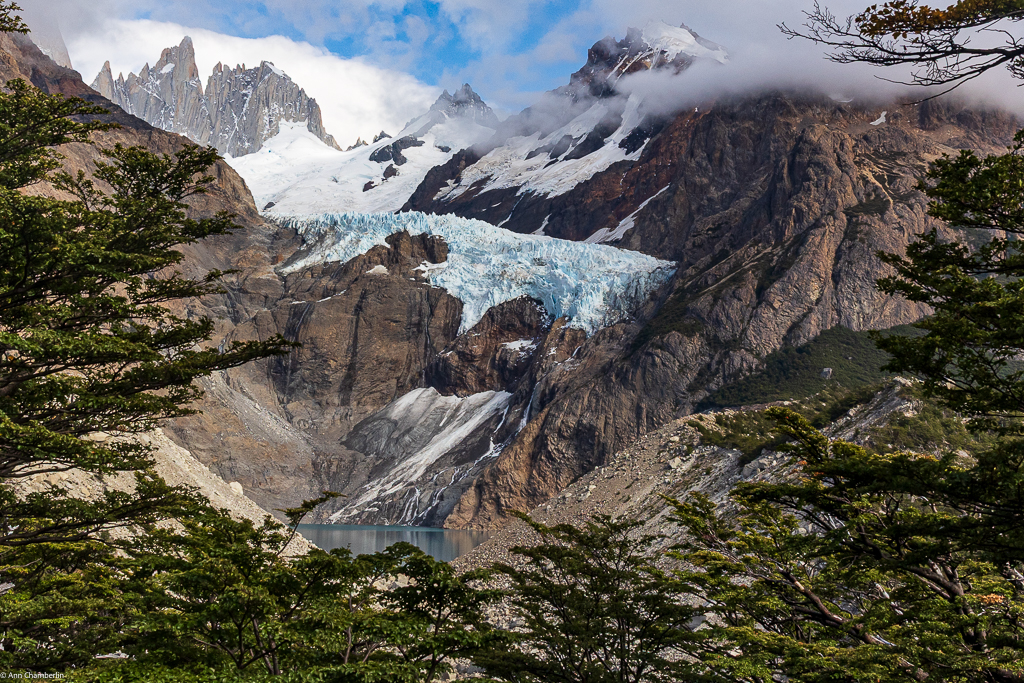
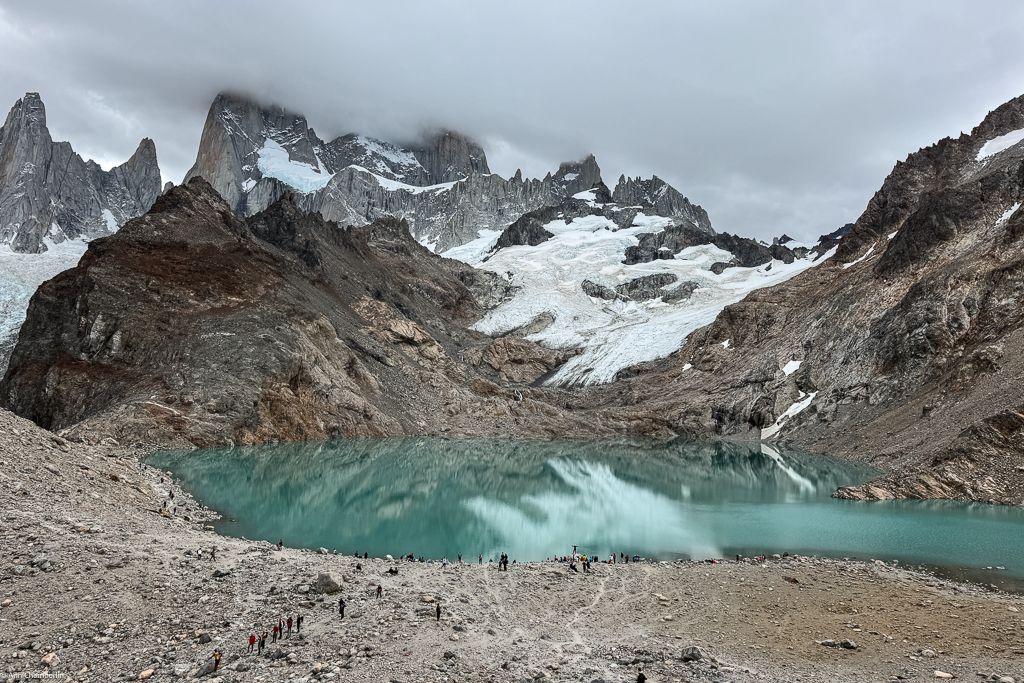
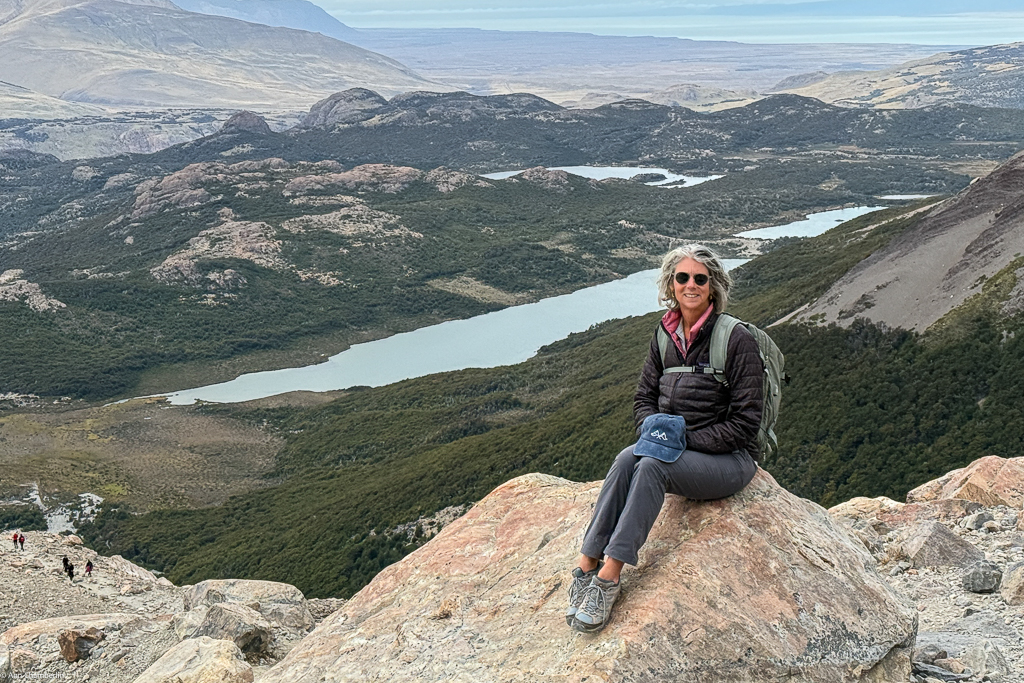
On our first full day in El Chaltén, we decided to take on the famous Laguna de Los Tres hike. This hike is a challenging, 14-mile trek to a little lake that sits under a glacier and commands sweeping views of the valleys below. Reaching the lake involves a 3,000 foot climb in just under one mile, with the gradient surpassing 65% in some places.
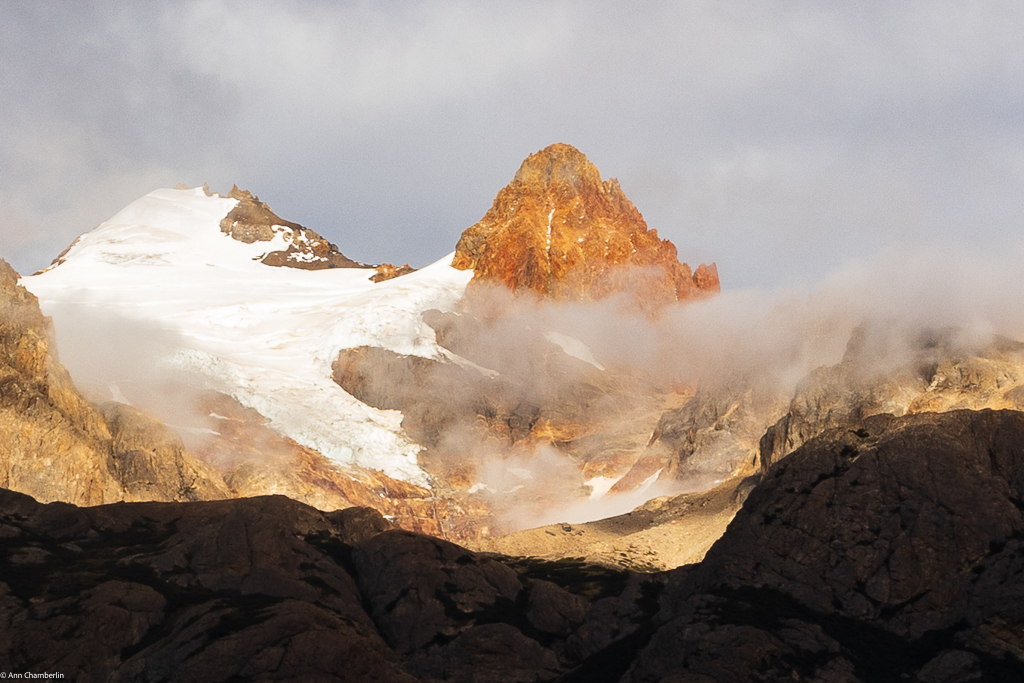
We were greeted at each turn along the way with incredible vistas of mountains, glaciers, rivers, and pristine forests, each more spectacular than the last. Taking it all in, it was easy to understand why Chouinard and Tompkins were so taken with the area that it changed the course of their lives forever.
El Calafate
We returned to El Calafate as the jumping off point for our next adventure, the Perito Moreno Glacier.
Patagonia is classified as a cold desert. Most of the vast region gets very little rainfall, due to the Andes mountains effectively blocking all the moisture coming off the Pacific Ocean from the prevailing westerly winds.
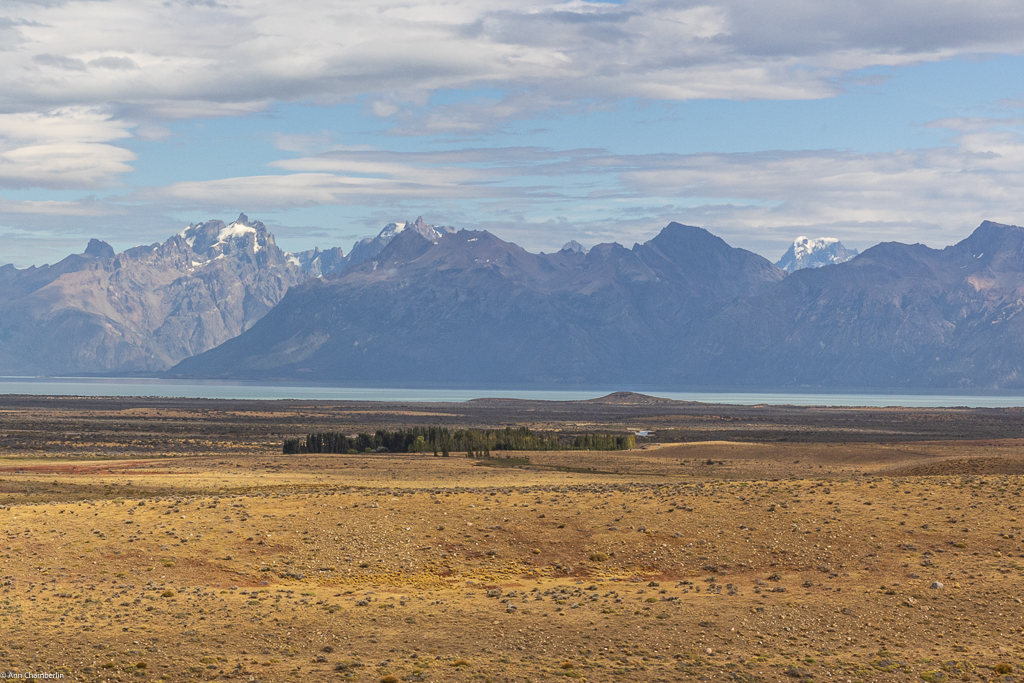
The Andes also produces one of the most dramatic precipitation gradients anywhere. On the windward, Chilean side of the mountains, there are spots that get over 250 inches of rain per year. The eastern slope, in Argentina, only gets around 30 inches per year. By the time you get to El Calafate, only 30 miles east of the mountains, the annual rainfall is under 10 inches per year. The landscape of most of Patagonia is a mostly barren steppe, with just some grass and scrub.
Because of this, the first European settlers to come to this area were primarily engaged in sheep ranching, as the land wasn’t good for anything else. El Calafate was originally established as a transfer station for their wool. Today, it’s mainly a tourist center for people coming to see the glacier.
Perito Moreno Glacier
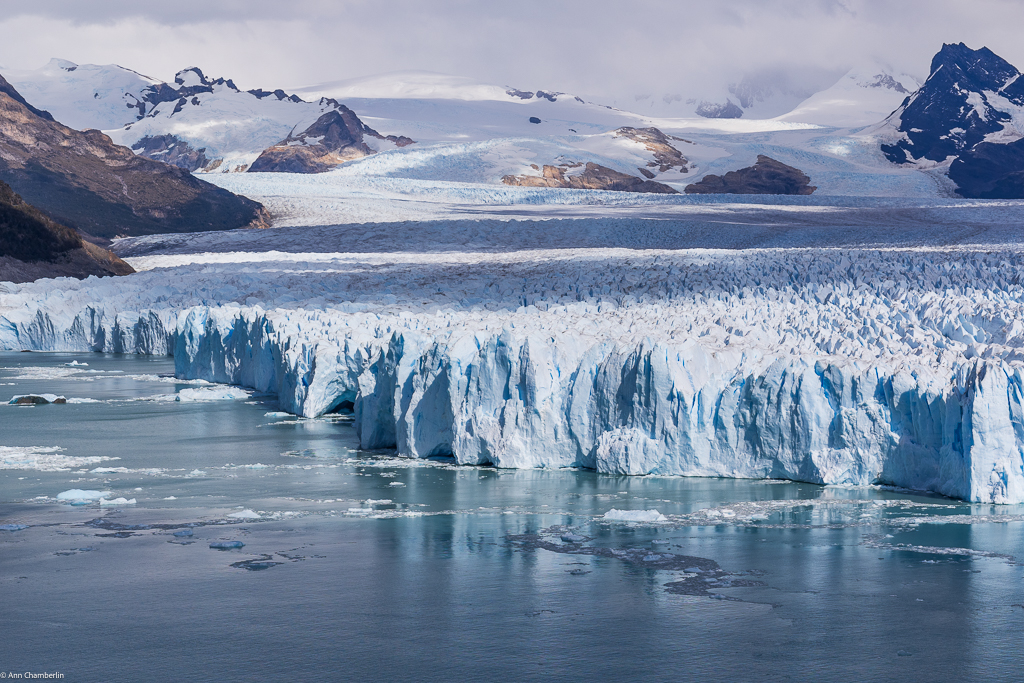
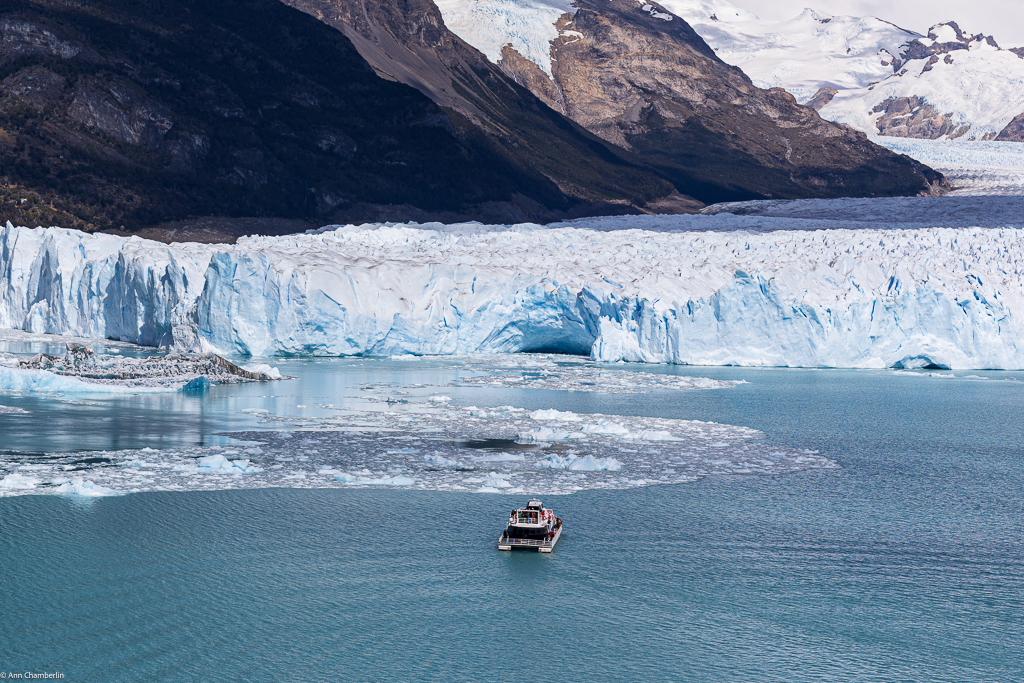
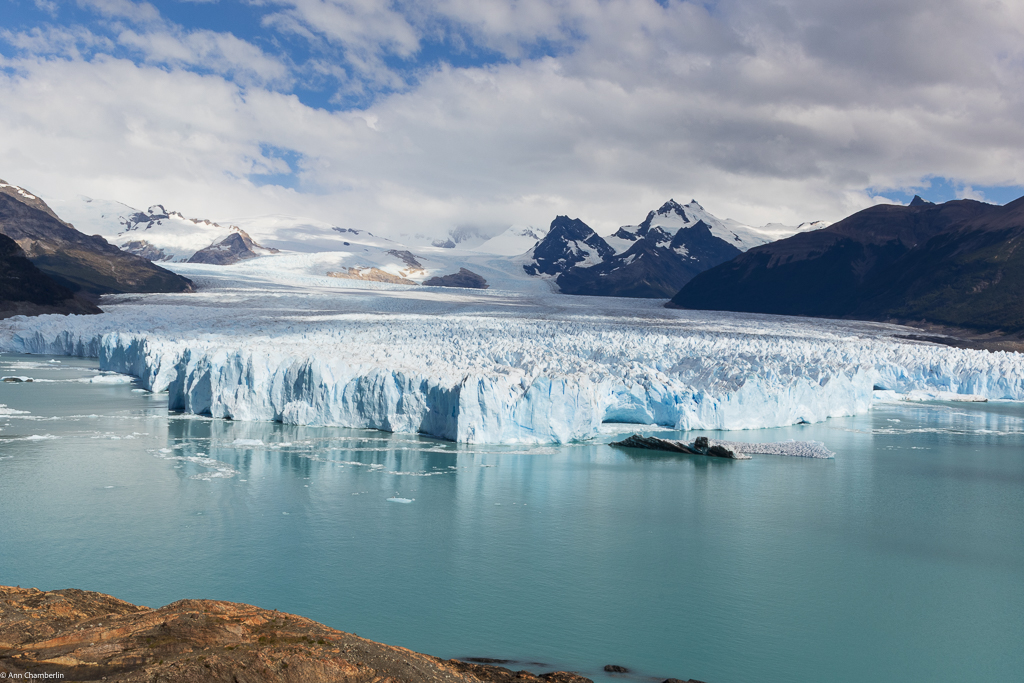
The Perito Moreno Glacier is Patagonia’s largest tourist attraction, and for good reason. It covers almost 100 square miles, averages nearly 300 feet in height above the water and is one of the few glaciers in the world that is still advancing. Located within Los Glacieres National Park, it is one of hundreds of glaciers that make up the Southern Patagonian Ice Field.
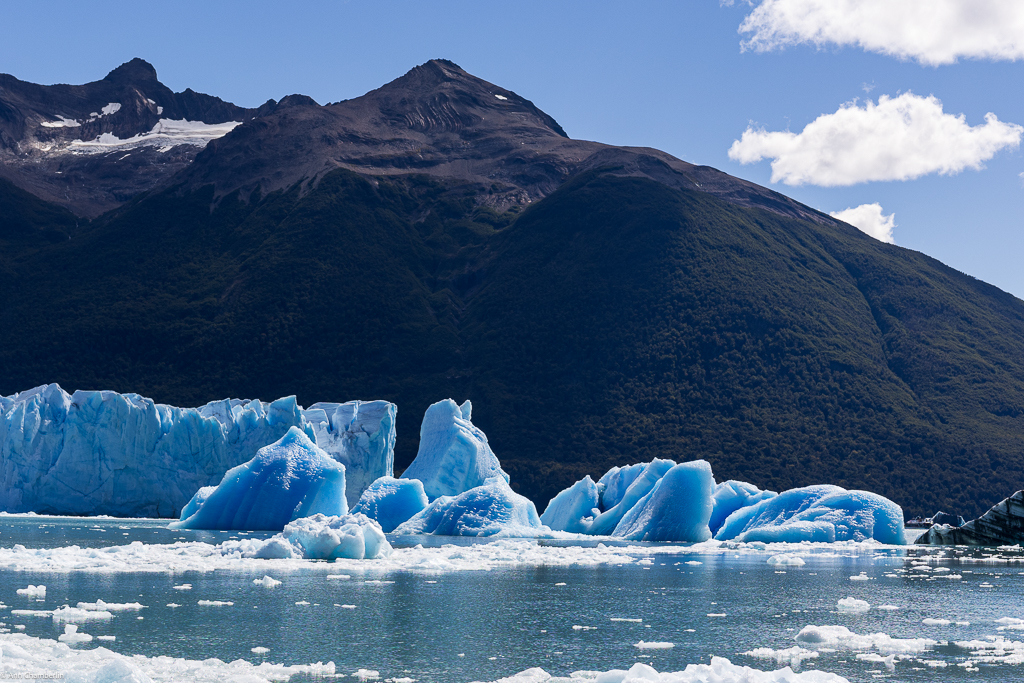
The glacier is easy to visit, with many miles of walkways and viewing platforms built just across a narrow waterway. You can also see the glacier from sea level, as there are many boat excursions that take you right up to the side of the glacier. The shades of blue within the glacier are a mesmerizing sight, but the real magic is the calving of icebergs.
We were fortunate enough to witness a huge iceberg being calved right in front of us. We captured the entire event and the video below is well worth a minute of your time to watch. While it was incredible to watch, it was also a sad reminder that the iceberg is now shrinking at an unprecedented rate. We heard people saying that not that many years ago, they might wait weeks to see a single iceberg being calved. In the few short hours we were there, we saw at least three.
Upsala Glacier and Estancia Cristina
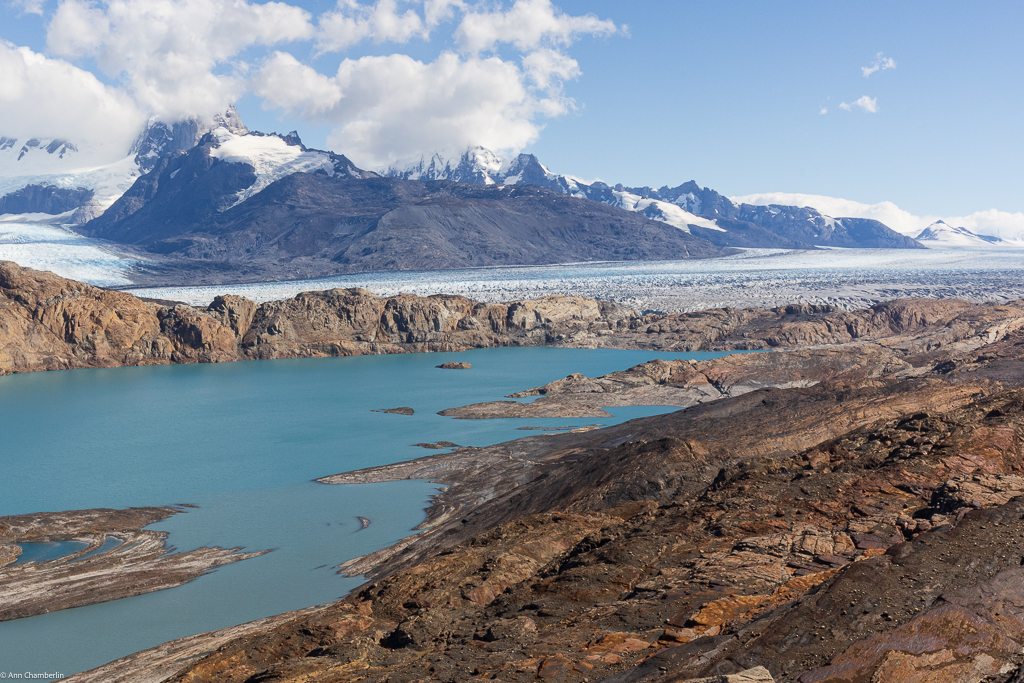
On our final day in El Calafate, we started with a boat excursion to view another glacier, Upsala. We then took another beautiful hike at Estancia Cristina.
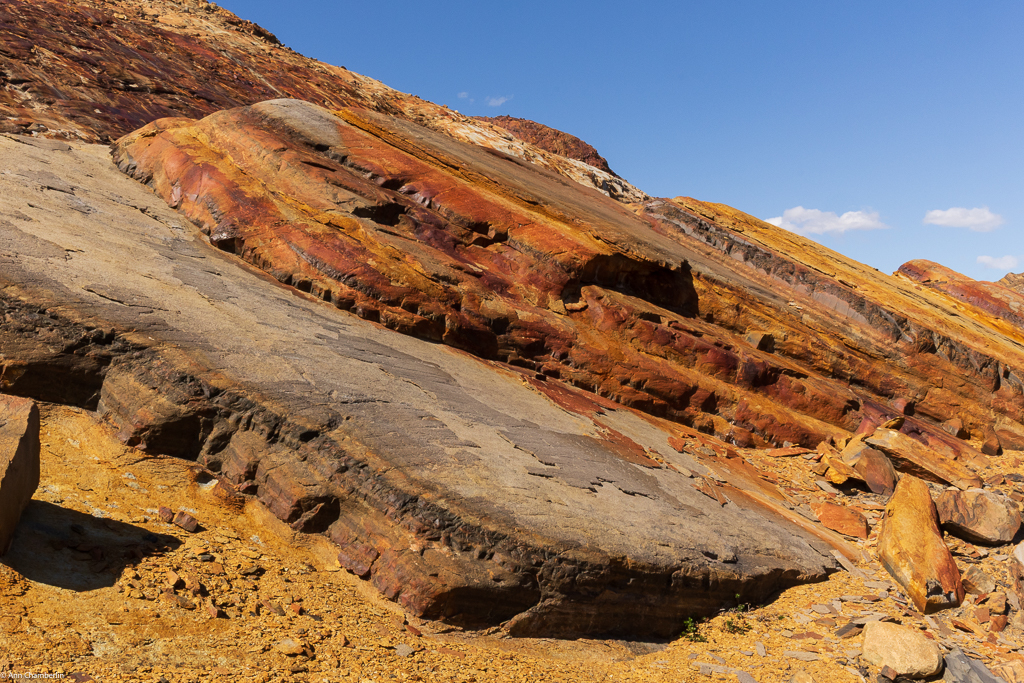
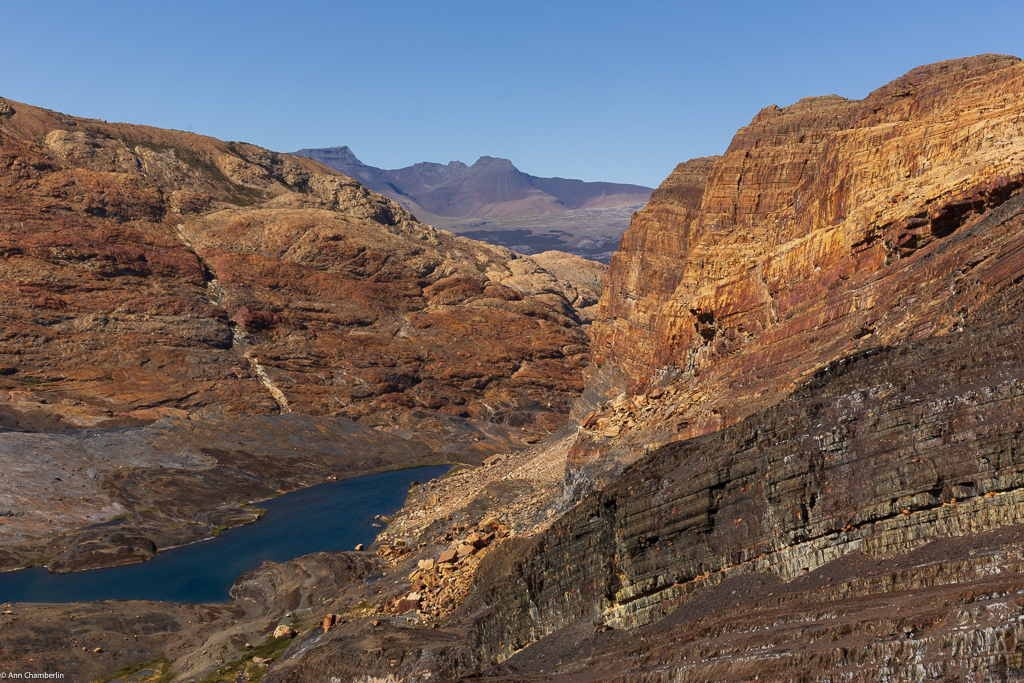
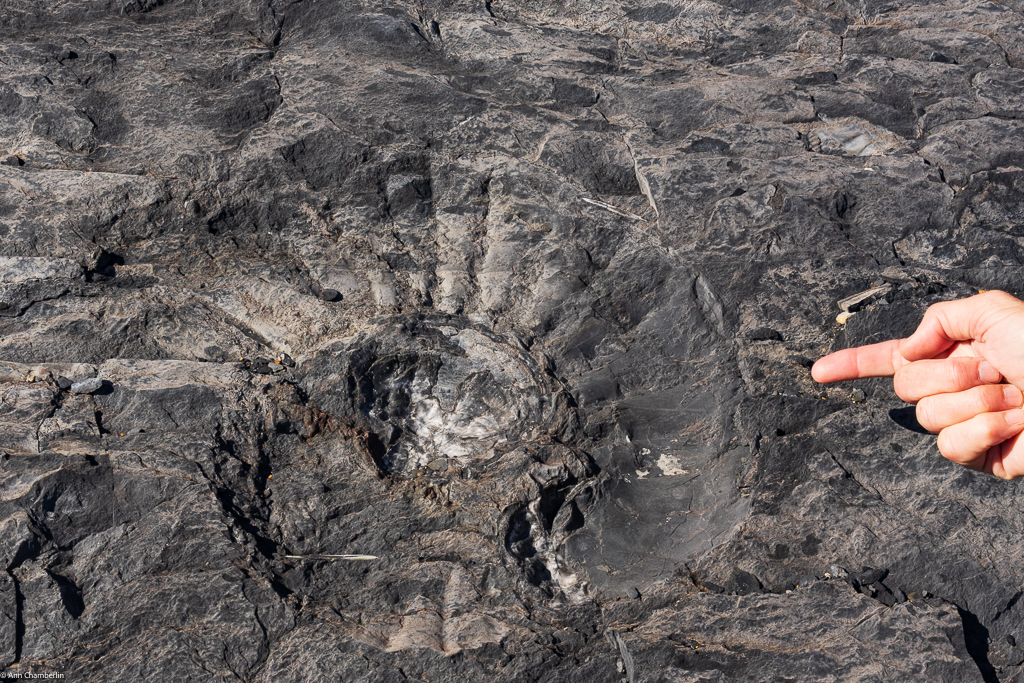
Originally developed as a 60,000-acre sheep ranch, the estancia today is a high-end, boutique hotel that sits within the Los Glaciares National Park. Our hike began at an overlook with sweeping views of the Upsala glacier. From there, we made our way through a an amazing, multicolored and layered valley that has been named ‘Fossil Valley’.
Through millions of years of receding water and erosion, the valley has revealed thousands of fossils of undersea creatures that are millions of years old. Most of them look like little squid, but the more interesting ones resemble a nautilus that was over a foot across.